The Second-Gen Reunion Boom: Why Veteran Groups Are Dominating 2026 Live Stages
The reunion wave is bigger than nostalgia: familiar songs, adult fandoms, and renewed stage chemistry are giving veteran K-pop acts another moment in the spotlight.

Matsu Patty
Asian Pop Reactor & Editor
Key Takeaways
Why are older fandoms making reunions viable?
A reunion can turn years of attachment into demand for a new release or a concert. The audience already knows the songs; what has changed is the opportunity to experience them together again. That makes a returning group different from a debut that must introduce its sound, members, and identity from scratch.
In its June 23, 2026 report, The Korea Herald describes a growing nostalgia market supported by fans who discovered artists as teenagers and now have more purchasing power as adults. Its industry source points to a broader audience that includes listeners in their 30s and 40s. That is an expansion of K-pop's audience, not evidence that younger fans have stopped mattering.
The distinction helps explain the reunion's appeal without reducing it to sentimentality. A song can carry a personal memory and still work as a piece of music. A concert gives the listener both experiences at once: recognition of a familiar chorus and the chance to hear what the performers do with it now.
TVXQ and BIGBANG make the 2026 live-stage case concrete
TVXQ's stadium anniversary and BIGBANG's festival return show two different routes to a major stage. Nissan Stadium's official event notice records TOHOSHINKI's April 25–26, 2026 anniversary concerts in Yokohama as completed. A Real Sound post-show report confirms the two dates and the performances by Yunho and Changmin. This was a celebration of their Japanese debut by the established duo, not a reunion of TVXQ's original five-member lineup.
BIGBANG's Coachella appearances were a group-stage return by G-Dragon, Taeyang, and Daesung. The Korea Herald's first-weekend report describes the trio's Outdoor Theatre performance with a live band; The Hollywood Reporter's April 20 coverage confirms the second-weekend Sunday-night set took place. Again, this was not an original-five reunion.
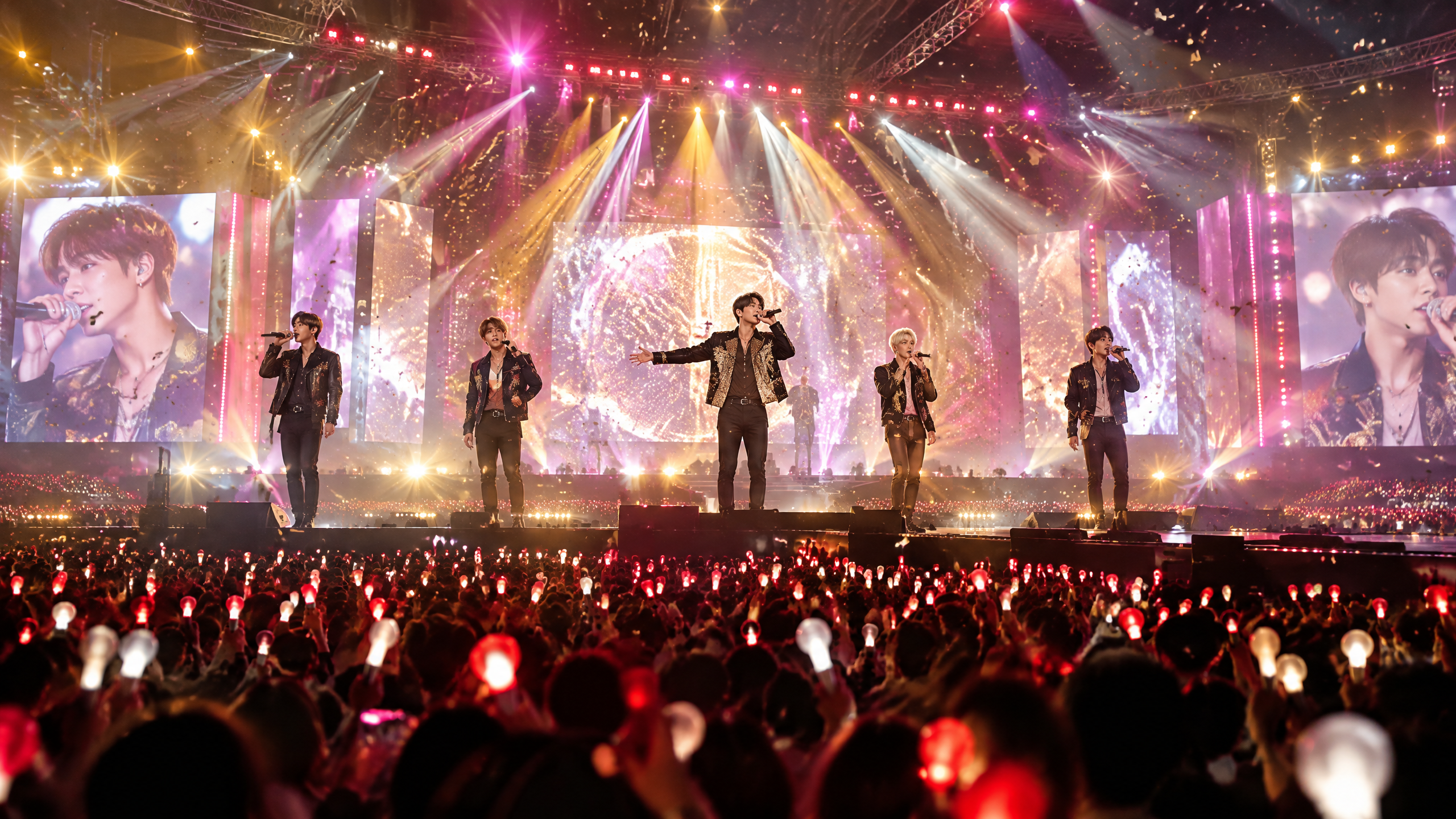
The live band gives the performance discussion a specific example rather than a generation-wide assumption. It invites listeners to notice how the singers work with the arrangement and share the stage. These stadium and festival appearances demonstrate continuing reach; without comparable attendance or revenue data, they cannot prove that all veteran groups outperformed every newer act.
The 2026 wave extends beyond second-generation idols
The most useful evidence shows several kinds of return, rather than one uniform stadium-tour boom. The same Korea Herald report documents Secret's June 18 release, Secret Flavor, and SeeYa's preparations for a 20th-anniversary reunion. At the time of that report, SeeYa was preparing a five-city concert tour for August; that announcement alone does not verify the eventual attendance or completion of every date.
Lineup details matter, too. Secret's project included vocalist Yebin in place of former members Han Sun-hwa and Song Ji-eun, according to the report. Calling that an unchanged original-lineup reunion would erase an important part of the story.
The reporting also includes I.O.I and Wanna One, extending the discussion into later debut eras. Wanna One's April return was through a reality series; the June report said new music and reunion concerts had not been announced. A television reunion can show continuing interest, but it is not a ticket-sales statistic.
These examples support the broader case for veteran acts returning to public attention. They do not establish a market-wide ranking in which second-generation groups dominate every live stage. Here, the reunion boom is about renewed relevance and the kinds of events fans want—not a claim of measured supremacy.
2NE1 shows why a return can feel like an event
2NE1's reunion is a useful recent blueprint, with a timeline that should not be blurred into a new 2026 tour announcement. Billboard reported the four-member reunion on July 22, 2024. The announced 15th-anniversary shows were to begin in Seoul that October, followed by Osaka in November and Tokyo in December, with touring continuing into 2025.
That report also recalls the group's 2022 Coachella reunion and its 2016 disbandment. The gap between those milestones helps explain why seeing the members together carried significance beyond another performance of a familiar song. The lineup itself was part of the event.
The lesson for 2026 is that reunion projects can offer a compelling reason to return to a catalog. It is not that every returning act will reproduce 2NE1's trajectory, or that a 2024 announcement proves a show is on sale today. Before making travel plans, check the artist or promoter's current notice rather than an old tour headline.
What should listeners notice in a veteran performance?
The strongest comparison is between performances, not between birth dates or generation labels. For a reunion stage, listen for how the group uses a familiar song: whether the arrangement gives a vocalist room, how members share attention, and where the crowd becomes part of the performance. These are practical viewing questions, not claims that every older act uses the same technique.
Vocal character matters more than perfection alone. Notice phrasing, changes in intensity, and how a singer moves between a verse and a demanding chorus. A performance can be emotionally convincing without sounding identical to the studio recording. Conversely, a polished sound does not by itself establish that a singer lacks expression.
Crowd interaction is part of the music. A pause before a chorus, a response from the audience, or a member taking time to address the room can change the pace of a set. Those choices offer another way to assess stage presence beyond the precision of a dance formation.
Microphone choice is not a verdict. A handheld microphone can suit one arrangement and a headset another. From an uploaded clip alone, avoid treating either as proof of uninterrupted live singing. Comment on what the recording lets you hear, and leave room for what its mix does not establish.
Why this need not become an older-versus-newer argument
Veteran groups and newer acts can offer different pleasures without one invalidating the other. Tight choreography can be expressive. A looser arrangement can be deliberate. The question is whether the choices serve the song and sustain the performance.
For a listener discovering an older group now, a reunion can provide an entry point into its catalog. For a longtime fan, it can offer a chance to hear familiar material in a different setting. Those are plausible routes into the same music; they should not be confused with measured evidence that all Gen-Z viewers prefer veterans or that particular clips are driving a quantified streaming revival.
Matsu Patty's reaction archive is a natural place to keep exploring performances across eras. For a wider look at Asian pop scenes beyond generational labels, the Q-pop and T-pop editorial considers what gives different local scenes their identity.
A thoughtful Matsu Patty perspective: value the connection
A thoughtful Matsu Patty perspective is to treat the reunion wave as an opportunity for discovery, rather than a contest over which era produced the only authentic idols. Vocal expression, charisma, and theatrical staging are worth discussing on their own terms. Celebrating those qualities in a veteran act need not mean dismissing today's groups.
The best question to bring to the next stage is simple: what makes this performance connect? It might be a distinctive vocal phrase, a familiar chorus that gets the audience singing, or the way the members share a moment. That is a more rewarding conversation than assuming an older debut date guarantees a better show.
Veteran K-pop's renewed appeal suggests that a group's cultural life need not end with its original promotional cycle. The 2026 reporting gives that idea a concrete business context. The performances still have to deliver—and that is exactly what makes them worth watching.
Keep exploring in the Matsu Patty article archive, or follow the current daily reaction schedule for the next listening session.
Join the Pop Dispatch VIP List
Matsu Patty publishes new deep-dive articles every Tuesday and Thursday, with daily reaction videos Monday through Friday. Get the Monday Pop Dispatch newsletter directly in your inbox.